
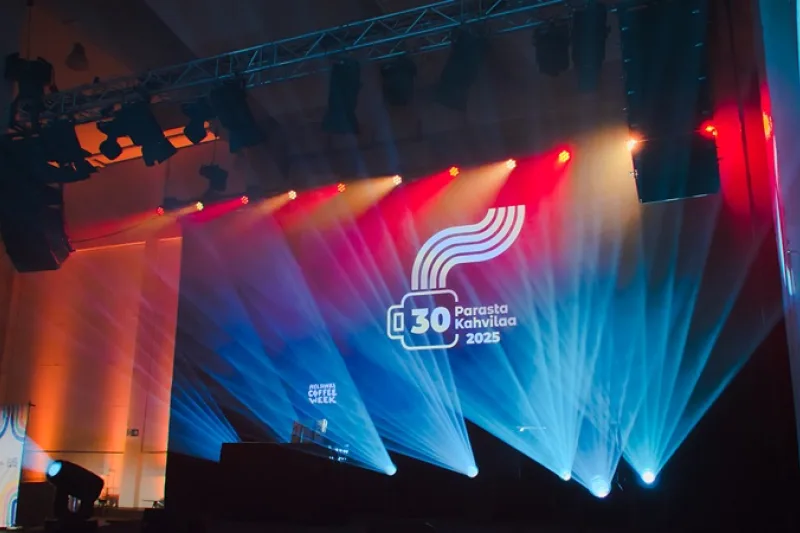
Case study: Roast Fest 2025
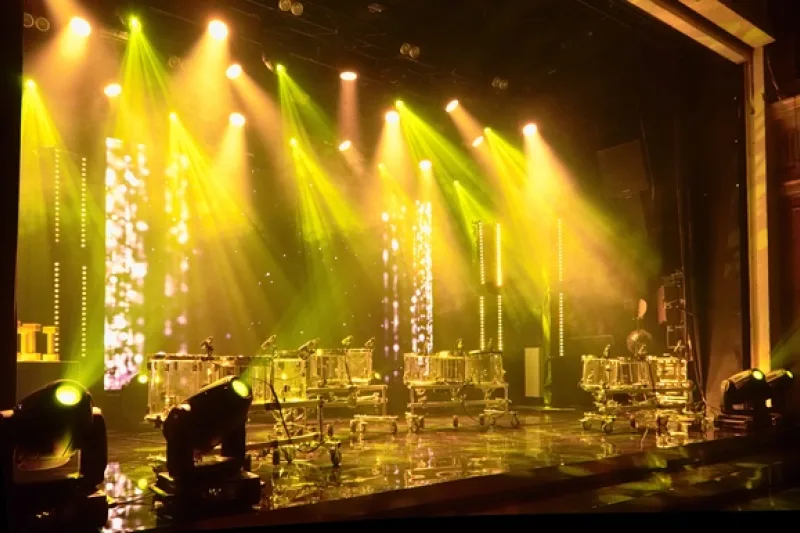
The main event of Helsinki Coffee Week, Roast Fest 2025, was held at the Kattilahalli in...

Services
Complete sound solutions for seminars, corporate events, concerts and public events.
Services
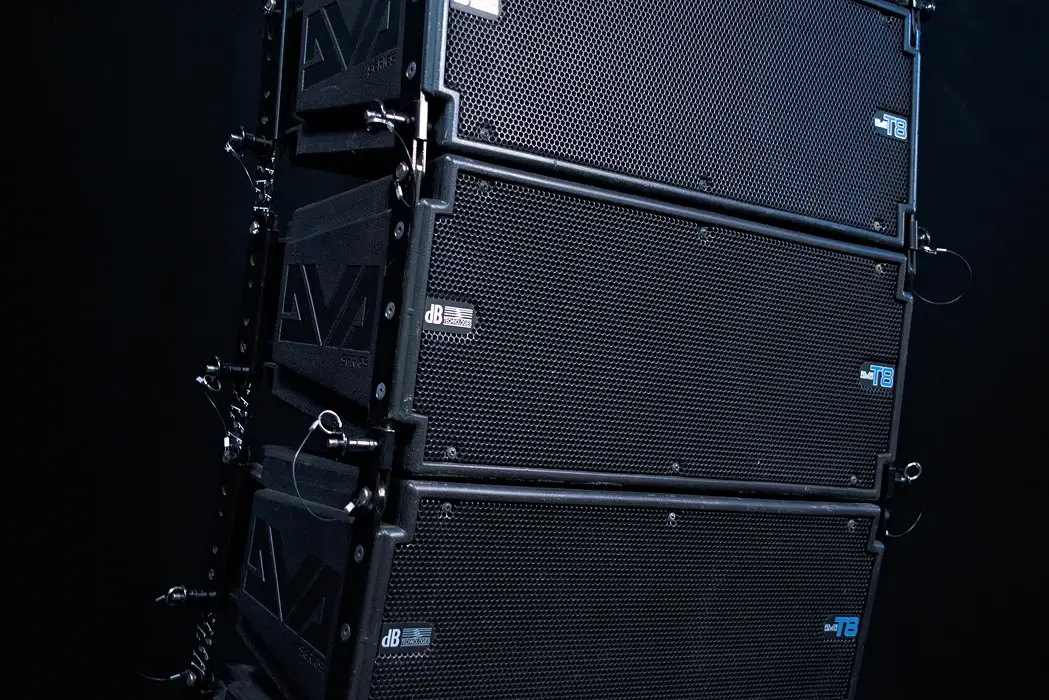
Sound reinforcement is the foundation of an event. Whether it is a seminar, corporate event, concert or large public event, every participant must hear clear, even audio without interference. We design the system around the venue, audience, performers and programme so that speech and music reach everyone clearly and evenly.
Our equipment ranges from compact speech and meeting systems to setups for large clubs and outdoor events. We can also integrate conference microphones and simultaneous interpretation with meeting audio.
Services
Our experienced sound technicians tailor the setup to your event’s venue, performers and programme, ensuring reliable operation and excellent sound quality.
Our technicians install, test and monitor the equipment throughout the event, and mix bands when required.
References
Everything from one supplier
Sourcing event technology from several suppliers takes time and adds complexity. Our team provides sound, lighting, video and streaming technology solutions, together with technical production, coordinated and tailored to your event.
Request a quote →Get in touch
Let’s discuss the technical needs of your event. All we need to get started is the date, venue and estimated number of participants.
The date, venue, number of participants and what you have planned so far.
We will get back to you by the next business day and clarify any details as needed.
We will design a solution for your event and arrange a site visit if needed. Requesting a quote involves no obligation.
DC EventTech
Koivukummuntie 8
01510 Vantaa
VAT ID FI20332985
For a seminar focused on speech, the priority is speech intelligibility throughout the room, so the system can be very compact. Microphones, loudspeakers and other equipment are selected according to the shape of the room, the number of speakers and the seating arrangement.
Music places greater demands than speech on sound pressure levels, frequency response, monitoring and mixing. A sound system designed for music is also well suited to speech, but the reverse does not apply. The planned programme must therefore be taken into account when sizing the system. Bands and orchestras also need more equipment, such as microphones and monitors, than background music or a DJ.
A microphone may be needed even in a small room if there are many participants relative to its size, the acoustics are challenging or the event is being streamed. Even sound coverage also benefits participants with hearing impairments. An induction loop can be added to the setup when needed.
Yes. Depending on the needs of the event, audience questions can be handled using handheld microphones passed around the room or conference microphones placed on tables. We also offer throwable Catchbox microphones.
The scope of the equipment cannot be determined solely by the number of participants. In addition to the performers’ needs, it is essential to know the required coverage area, the shape of the venue and any noise restrictions.
Our sound technicians normally install, test and supervise the equipment during the event, and mix musical performances when needed. We can also provide simple background music systems without on-site supervision during the event.
Yes. Recording must always be ordered separately so that the necessary equipment can be brought along and connected to the system. We can also supply an audio feed to external teams, such as video crews or the media.
The rider specifies details such as the line-up, microphones, monitoring requirements and stage plan. This allows us to ensure that the proposed sound system is suitable for the performance. The rider forms part of the artist’s contract, and any changes to its requirements must be agreed with the artist. For live music, performers often need to hear their own playing through separate monitor loudspeakers or in-ear monitors. The type and number of monitors, along with any specific requirements, are set out in the performer’s technical rider.
Yes, audio can be distributed to different areas or even separate buildings. Planning includes checking cabling requirements, potential delays and whether volume levels need to be controlled separately in each area.
The cost depends on the size of the sound system and the type of programme, the number of microphones and monitors, the personnel required, setup time and transport.